
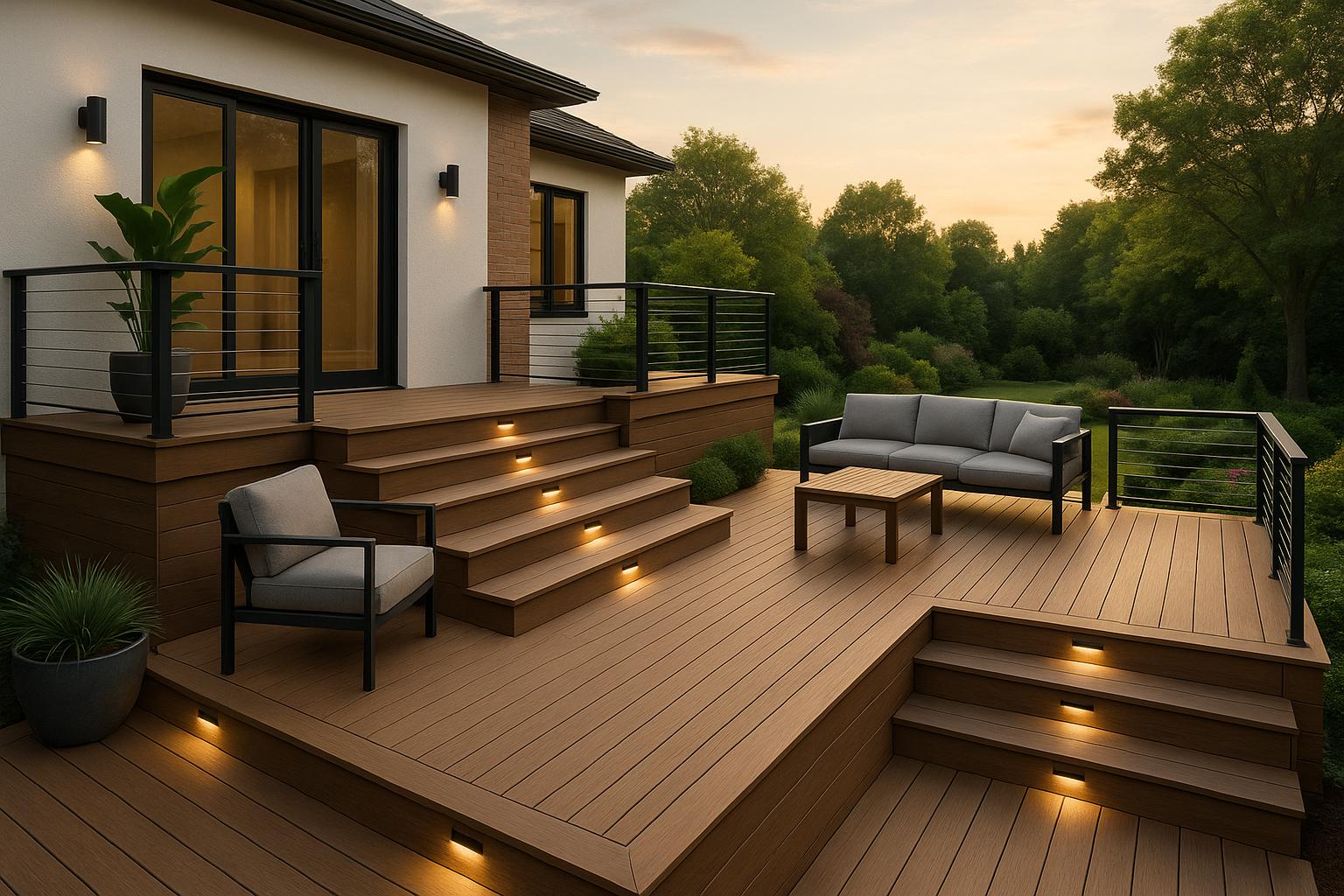
Multi-level decks are an excellent way to transform your outdoor space. They solve common backyard challenges like uneven terrain, create separate zones for different activities, and increase your home’s value. With the right design, these decks blend functionality with style, offering benefits such as:
- Maximizing space: Create distinct areas for dining, lounging, or entertaining.
- Handling sloped yards: Work with your yard’s natural layout instead of fighting it.
- Boosting home appeal: A well-designed deck can make your property stand out to potential buyers.
- Improving usability: Better traffic flow and more space for guests.
Whether you want a peaceful retreat or a lively entertainment hub, multi-level decks can meet your needs while adding architectural interest to your home.
How to Build and Frame a Multi-Level Deck | Trex Academy

Key Planning Tips
- Design layout wisely: Place dining areas near the kitchen and create clear pathways between levels.
- Ensure safety: Use proper railings, lighting, and code-compliant stairs.
- Choose durable materials: Options like composite or PVC require less maintenance and last longer.
- Add functional features: Built-in seating, planters, and storage can enhance usability.
- Focus on structure: Proper site preparation and sturdy framing are essential for stability.
Multi-level decks are about more than just looks – they’re a practical, long-lasting upgrade for your outdoor space.
Multi-Level Deck Design Basics
A thoughtfully designed multi-level deck blends creative flair with everyday practicality, while also adding value to your home.
What Are Multi-Level Decks and Their Benefits
Multi-level decks are outdoor structures made up of platforms at different heights, connected through features like stairs, ramps, or landings. These designs can be customized to fit your property’s unique layout, whether you prefer a seamless flow between levels or distinct, separate areas.
One of the biggest advantages of multi-level decks is their ability to handle uneven or sloped terrain. By adapting to the natural landscape, these decks reduce the need for extensive grading, manage water flow effectively, and naturally divide spaces for different activities. This combination of practicality and flexibility opens the door to countless design possibilities.
Common Uses and Layout Options
The adaptability of multi-level decks makes them ideal for a range of uses and layouts. For example:
- Upper levels often house dining or cooking spaces, conveniently located near the home. These areas are perfect for outdoor kitchens, grilling stations, or dining tables, offering easy access and great views.
- Middle or lower levels can transform into cozy retreats. Think fire pits, hot tubs, or comfortable seating for relaxation. If your property includes a pool or water feature, a descending deck design can create a smooth transition while offering built-in seating areas.
When it comes to layout, multi-level decks can be tailored to suit your specific lot. On typical suburban properties, L-shaped or wraparound designs maximize deck space while leaving plenty of yard intact. For sloped or narrow lots, cascading or linear layouts ensure both functionality and visual appeal. Beyond their practical benefits, these decks add a polished, inviting look to your outdoor space.
How Multi-Level Decks Increase Property Value
A well-executed multi-level deck does more than enhance your outdoor living – it boosts your home’s curb appeal. The layered design adds architectural interest and depth, making your property stand out. Plus, the extra outdoor living space is a major draw for potential buyers, offering zones for dining, lounging, and entertaining.
Additionally, the natural shading provided by multi-level decks can help lower cooling costs during warmer months. And when built with durable materials and solid construction, these decks are built to last, ensuring they remain an asset to your home for years to come. This combination of beauty, functionality, and longevity makes multi-level decks a smart investment for any homeowner.
Planning and Design Requirements
Careful planning is key to creating a multi-level deck that is both practical and visually appealing. Focus on smooth traffic flow, safety, and well-thought-out features to ensure your deck meets your needs. These early decisions will naturally guide the structural and material choices you’ll make later.
Planning Layout and Traffic Flow
The foundation of a great multi-level deck lies in its layout. Design pathways that feel natural and make it easy for people to move between different areas.
For example, placing entertaining spaces close to the kitchen can make indoor–outdoor transitions effortless. If you’re adding a grilling station, think about safety – position it away from high-traffic areas and ensure proper ventilation to reduce risks.
In active zones, aim for open sight lines to keep the space functional and visually connected. On the other hand, private areas can benefit from partial screening for a sense of seclusion. Avoid abrupt level changes or disconnected spaces; every zone should have a clear role and a logical flow to the next.
Safety and Accessibility Requirements
Safety starts with meeting building codes. Use uniform stair risers to prevent tripping hazards, and ensure railings meet local height and spacing requirements, especially if children will be using the deck.
For wider stairways, install handrails on at least one side as required by code. Beyond basic compliance, consider accessibility features like gentle slopes, wider landings, and sturdy railings. These additions make the deck more user-friendly for individuals with mobility challenges and support long-term usability as needs change.
Lighting is another critical safety feature. Plan for well-placed lighting along stairs, level changes, and transition areas to prevent accidents after dark. Adding light switches on multiple levels can make the space even more convenient.
Adding Functional and Decorative Features
Incorporating built-in features can elevate both the functionality and style of your deck. For instance, built-in seating and planter boxes can help define different zones while also providing storage. Just be sure to account for proper drainage to protect the planters and the deck itself.
Electrical planning should happen early in the design process. Low-voltage lighting along railings, stairs, and surfaces not only enhances safety but also creates a welcoming ambiance.
Storage is especially important in multi-level designs, where each level may serve a different purpose. Built-in benches or weatherproof cabinets can help keep the space tidy and organized.
For added comfort and privacy, think about including shade structures like pergolas, privacy screens, or landscaping. These elements can create microclimates and enhance the deck’s overall appearance. If you’re considering water features like fountains or small ponds, plan carefully for their electrical, water, and drainage needs to avoid future complications.
sbb-itb-91ceeec
Structural Requirements and Building Basics
When constructing a multi-level deck, ensuring it is structurally sound and compliant with local building codes is non-negotiable. Each level must be securely supported, with all connections between levels meeting code requirements to guarantee long-term stability. These structural essentials build on the design principles discussed earlier.
Site Preparation and Foundation Building
Proper site preparation is the foundation – literally and figuratively – of a stable multi-level deck. Start by assessing your site. Look for slopes, drainage issues, and underground utilities that could influence the placement of your foundation. Clearly visualize and outline the layout boundaries to guide your planning.
Footings should be dug below the frost line to prevent shifting during freeze-thaw cycles. The required depth varies by region: typically 36 inches in colder climates and 18–24 inches in warmer areas. Each post must rest on a concrete footing sized according to code. Since multi-level decks need independent support for each level, you’ll often need more footings than a single-level design.
When installing support posts, opt for galvanized or stainless steel hardware to prevent rust, and use pressure-treated lumber specifically rated for ground contact for posts in direct contact with concrete. Allow footings to cure for at least 48 hours before moving on to framing.
Framing involves installing beams, joists, and blocking for each level. Joist spacing – commonly 16 or 24 inches on center – depends on your decking material and local regulations. Double-check all measurements and ensure each level is square before securing the framing permanently.
Freestanding vs. Attached Deck Sections
Choosing between freestanding and attached deck sections is a key decision in your design process, as each has its own benefits and challenges.
Freestanding decks are fully independent structures, supported entirely by posts, footings, and lateral bracing. Without a ledger board to anchor the deck to the house, builders often use string layout methods to ensure proper alignment and stability.
Attached decks, on the other hand, connect directly to the house or between levels. When attached to the house, the ledger board adds rigidity and support but requires proper flashing to prevent water damage. This integration strengthens the deck but demands careful attention to waterproofing.
"I would almost always advocate for the main beams running perpendicular to the house. My goal is a minimum of connections to the house wall. I’d prefer a deck that is structurally independent of the house even though it adds additional posts, footings and lateral bracing requirements." – CT_Yankee, Structural Engineer
For multi-level decks, a mix of both approaches is often used. For instance, an upper level might attach to the house for stability, while lower levels remain freestanding for flexibility. Freestanding sections allow more freedom in placement but require extra support, whereas attached sections provide inherent stability while needing careful waterproofing at connection points.
Connection Elements: Stairs, Stringers, and Landings
Smooth transitions between levels are vital for both safety and functionality, and this is where well-designed stair systems come into play. Stairs, stringers, and landings not only connect levels but also contribute to the overall structural integrity of the deck.
Stair stringers, typically cut from 2×12 pressure-treated lumber, form the framework of your stairs. For stairs wider than 36 inches, use at least three stringers, and add more for wider spans. To meet code and ensure safety, riser heights should be between 7 and 7.75 inches, with treads at least 10 inches deep.
Landings break up long stair runs and provide resting points, improving both comfort and safety. Near entrances, landings should be large enough to accommodate door swings, with a minimum depth of 36 inches in the direction of travel.
For shorter height transitions – usually between 14 and 21 inches – box steps are a practical alternative. These platform-style steps not only make transitions easier but can also double as seating or display areas.
Hardware plays a crucial role in maintaining stability. Use galvanized joist hangers, carriage bolts, and structural screws designed for outdoor use. In freestanding sections, lateral tie hardware can anchor the deck to nearby walls to reduce perpendicular movement, while horizontal bracing manages parallel movement.
Pay extra attention to where stairs connect to each deck level. These joints bear significant stress, so reinforce them by adding blocking between joists at stair attachment points. This distributes the load evenly across the deck frame, ensuring long-term durability and safety.
Material Selection and Customization Options
When designing a multi-level deck, choosing the right materials can make all the difference in durability, appearance, and cost. These decisions impact not only the look and feel of your deck but also how it performs over time, especially when exposed to different environmental conditions. Below, we’ll explore how material choices influence both design and long-term usability.
Decking Materials Comparison: Wood, Composite, and PVC
Each decking material brings its own set of strengths and challenges, especially in multi-level setups. The table below highlights key details to help you weigh your options:
| Material | Cost per sq ft | Lifespan | Maintenance | Weather Resistance | Appearance |
|---|---|---|---|---|---|
| Cedar | $3–8 | 15–20 years | High (annual staining) | Moderate | Natural, ages to gray |
| Pressure-Treated Pine | $2–5 | 10–15 years | High (biannual treatment) | Good | Natural, requires staining |
| Composite | $8–12 | 25–30 years | Low (occasional cleaning) | Excellent | Consistent, various colors |
| PVC | $10–15 | 30+ years | Very low (soap and water) | Superior | Uniform; won’t fade |
Cedar is a go-to for its natural beauty and insect resistance, making it ideal for ground-level decks. However, it requires regular upkeep to maintain its color and integrity. Pressure-treated pine, while budget-friendly, needs consistent care like sealing or staining to remain in good shape. Composite decking, made from a blend of wood fibers and plastic, offers a low-maintenance solution that resists fading, scratching, and staining – perfect for hard-to-reach areas on multi-level decks. PVC decking, the most durable option, is virtually maintenance-free, resists moisture, and handles heavy loads with ease, making it a premium choice for long-term performance.
Railing, Stair, and Additional Material Choices
Once you’ve selected the decking, it’s important to choose complementary materials for railings, stairs, and other structural elements. These components face significant wear and tear, so durability and safety should guide your decisions.
- Wood Railings: Pair well with wood decking and offer a classic look, but require frequent maintenance. Expect to pay $15–25 per linear foot for installation.
- Composite Railings: Match seamlessly with composite decking and demand less upkeep. They resist warping and splitting but are less suited for heavy-duty use. Costs range from $25–40 per linear foot.
- Aluminum Railings: Known for their strength and longevity, aluminum railings are low-maintenance and corrosion-resistant, with a price range of $30–50 per linear foot.
For stairs, builders often opt for aluminum stringers for added durability, composite treads for slip resistance and weather resilience, or wood treads for a natural aesthetic – though wood requires more upkeep. Modern cable railing systems, featuring stainless steel cables, are another popular choice. These systems provide clear sight lines, meet safety codes, and add a sleek, modern touch to multi-level decks.
Improving Functionality and Appearance
Once you’ve nailed down your deck’s design, adding the right lighting can take it to a whole new level. Thoughtful lighting not only makes your deck more practical but also creates a warm and inviting atmosphere.
Lighting Options for Multi-Level Decks
For multi-level decks, a mix of lighting types works best. Combine ambient lighting to brighten up the entire space, task lighting to make stairs and transitions safer, and accent lighting to draw attention to unique architectural features. This layered approach not only improves safety but also makes your deck a stunning spot to enjoy after sunset.
Conclusion: Building Your Multi-Level Deck
Creating a multi-level deck can transform your outdoor space, blending practicality with visual appeal. The process starts with thoughtful planning – considering your property’s layout, how people will move through the space, and choosing materials that align with your budget and lifestyle. When these factors come together seamlessly, the result is a deck that enhances your outdoor living experience.
The structure of a multi-level deck requires careful attention to detail. These designs demand precise engineering and professional know-how to ensure the deck is sturdy, safe, and meets local building codes. Skipping these steps can lead to costly errors, safety concerns, and a deck that doesn’t hold up over time or add to your home’s value.
Choosing the right materials is just as important. Whether you opt for classic cedar, low-maintenance composite, or tough PVC, each material offers unique advantages. Your decision should factor in your climate, how often the deck will be used, and how much time you’re willing to spend on maintenance.
Safety and compliance are non-negotiable. Professional contractors stay up to date with local building codes and prioritize essential safety features such as railings, non-slip surfaces, and proper lighting. Their expertise not only ensures a long-lasting deck but can also help you avoid expensive repairs down the road.
San Antonio Deck and Fence Works brings your vision to life with professional design-build services, incorporating features like built-in seating, integrated planters, and custom lighting to create a functional and beautiful outdoor space that adds value to your home.
Ready to take the next step? Use San Antonio Deck and Fence Works‘ online budget calculator and schedule a consultation to start building the multi-level deck of your dreams.
FAQs
What key safety factors should I consider when designing a multi-level deck?
When planning a multi-level deck, keeping safety at the forefront is essential. Start by ensuring the deck’s structure is sound. This means adhering to local building codes and using sturdy, long-lasting materials. Proper construction methods are key to handling the deck’s weight and avoiding potential risks.
Install railings that comply with code requirements – typically at least 36 inches high. Opt for designs that provide extra safety for children and pets. Don’t overlook lighting, especially for stairs and walkways. Well-placed lights can help prevent trips and falls, making the space safer for everyone.
To make the deck more accessible, think about adding ramps or wider steps. These features can make it easier for individuals with mobility challenges to enjoy the space. By prioritizing these elements, you can create an outdoor area that’s both safe and welcoming for all.
What are the best materials for a multi-level deck based on my climate and how much maintenance I want to do?
Choosing materials for your multi-level deck comes down to your local weather conditions and how much maintenance you’re ready to commit to.
Wood offers that timeless, natural aesthetic many homeowners love. However, it demands regular care – think staining and sealing – to guard against moisture and wear. On the other hand, composite decking, a blend of wood fibers and plastic, is a sturdy, low-maintenance alternative that resists moisture and fading. Then there’s PVC decking, made entirely from synthetic materials, which stands out for its toughness. It’s resistant to mold, mildew, and fading, making it perfect if you want to keep maintenance to a minimum.
If you’re in a region with tough weather conditions, composite or PVC decking is a smart pick. Both handle moisture and temperature swings with ease. Plus, they only require occasional cleaning, unlike wood, which needs more frequent upkeep to stay in good shape.
How can I add lighting to a multi-level deck to improve safety and create a welcoming atmosphere?
To create a safer and more welcoming multi-level deck, adding lighting in strategic spots is a smart move. Install lights near doors, stairs, and pathways to reduce the risk of accidents and ensure the area meets safety standards. For a cozy and inviting atmosphere, opt for soft, warm white LED lights along railings, balusters, or even the deck floor. Step lights are another great option – they not only illuminate pathways but also add a touch of style. Perimeter and railing lights can further improve visibility while defining the deck’s structure, giving your outdoor space a polished and practical look.
Related Blog Posts
- How to Plan Your Deck Layout for Small Backyards
- Best Deck Designs for Families with Kids
- How to Choose Deck Materials for Texas Weather
- HOA Fence Rules: Common Problems and Solutions
