
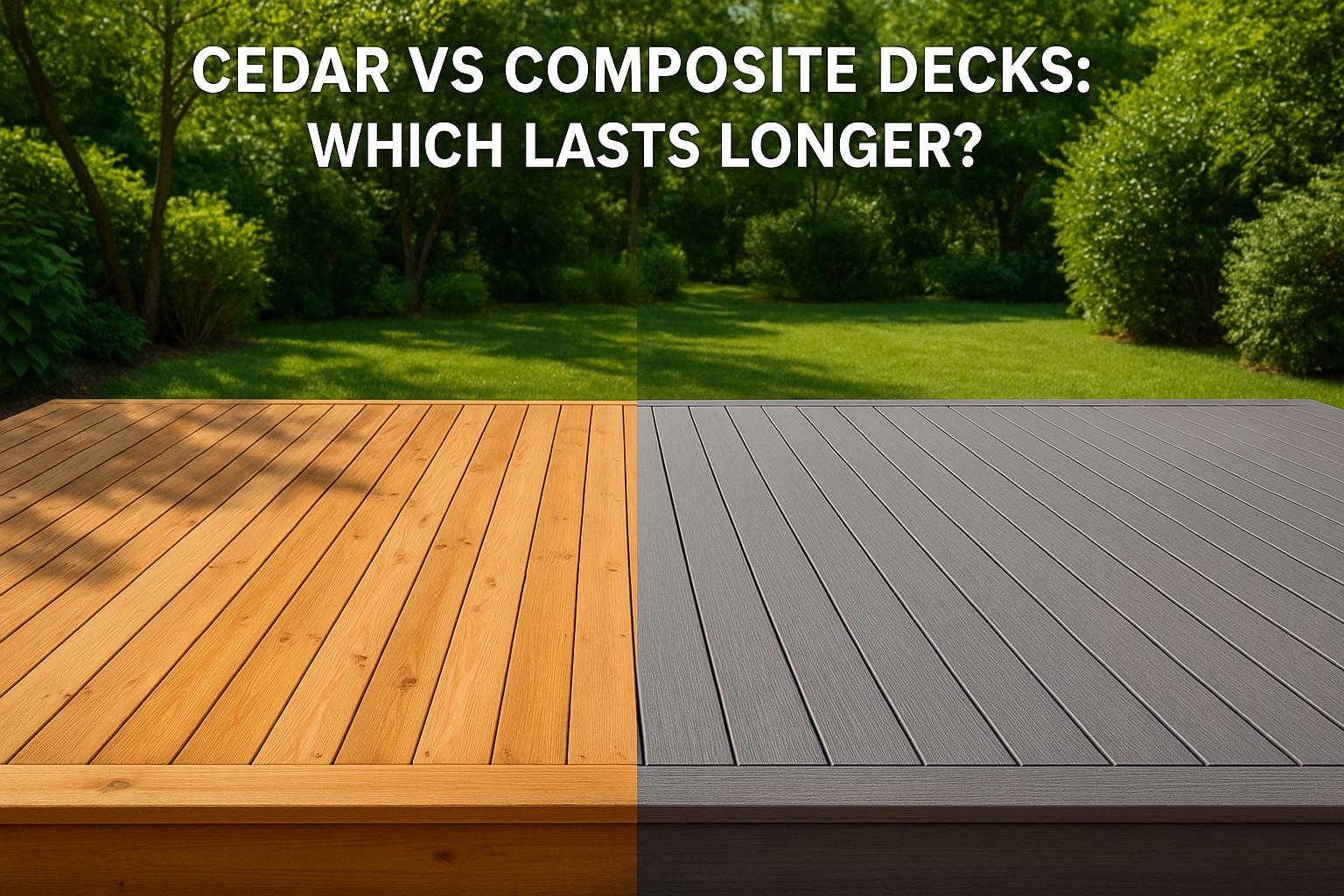
Cedar vs Composite Decks: Which Lasts Longer?
When deciding between cedar and composite decking, durability and maintenance are the most important factors. Cedar decks last 10–20 years with proper care, while composite decks last 25–30+ years with minimal upkeep. Cedar offers natural beauty but requires regular cleaning, sealing, and staining to prevent rot, cracking, and UV damage. Composite decking, made from wood fibers and plastic, resists moisture, insects, and fading, making it a low-maintenance and longer-lasting option.
Quick Comparison
| Factor | Cedar Decks | Composite Decks |
|---|---|---|
| Lifespan | 10–20 years | 25–30+ years |
| Maintenance | High: Cleaning, sealing, staining | Low: Occasional cleaning |
| Moisture Resistance | Moderate, prone to rot if neglected | High, resists rot and swelling |
| UV Protection | Needs regular staining | Built-in UV stabilizers |
| Insect Resistance | Natural oils deter some pests | No organic material for pests |
If you prefer low maintenance and long-term durability, composite decking is the clear winner. However, if you’re willing to invest time in upkeep, cedar provides a classic, natural look.
The Battle Of Deckboards: Compairing Longevity of Different Materials || Dr Decks
Cedar Deck Lifespan and Durability
Cedar has long been celebrated as a top-tier choice for outdoor decking, thanks to its dependable performance over the years. Understanding cedar’s strengths and limitations can help you manage expectations and get the most out of your deck.
How Long Cedar Decks Last
A well-installed cedar deck typically lasts 10–20 years, and with proper care, it can exceed the 20-year mark. However, its actual lifespan depends heavily on factors like climate and maintenance.
Western Red Cedar tends to last longer than Eastern White Cedar because of its natural oils. These oils provide enhanced protection against decay and insect damage, which significantly contributes to its durability.
Geography also plays a big role. Cedar decks in the Pacific Northwest often reach the higher end of their lifespan due to the wood’s natural compatibility with the local environment. On the other hand, decks in harsher climates may need replacement closer to the 10 to 15-year range, even with regular upkeep.
What Affects Cedar Deck Durability
Cedar’s durability is largely due to its natural oils, which make it resistant to rot, decay, and wood-boring insects. These oils also give cedar an edge in handling moisture compared to many other types of wood. Still, several factors can influence how well cedar holds up over time.
Moisture exposure is one of the biggest threats. While cedar is better at resisting water than most woods, consistent exposure to standing water, high humidity, or poor drainage can wear down its natural defenses.
Take San Antonio, for example. The region’s intense summer heat and high humidity present unique challenges. With temperatures often soaring above 100°F, cedar can expand and contract repeatedly, leading to cracking, warping, and splitting. Meanwhile, the high humidity accelerates the breakdown of cedar’s natural oils, further compromising its durability.
UV radiation is another major concern. Constant exposure to sunlight causes cedar to fade from its warm, natural tones to a silvery-gray color. Beyond the cosmetic change, UV rays also weaken the wood fibers on the surface, making the deck more vulnerable to moisture damage.
Lastly, the quality of the installation matters. Features like proper board spacing, good ventilation, and the right fasteners can significantly extend cedar’s lifespan.
Cedar Deck Maintenance Needs
Cedar decks require consistent care to stay in good shape. Here’s how to keep yours looking and performing its best:
- Annual cleaning: Use a power washer or scrub the deck to remove dirt, mildew, and debris. This prevents moisture from getting trapped and causing damage.
- Sealing and staining: Apply a protective sealant or stain every 2 to 3 years – or more frequently in harsh climates like South Texas. A penetrating sealer helps repel moisture, while UV-protective stains shield the wood from sun damage and fading.
- Regular inspections and repairs: Check for loose boards, protruding nails, or damaged areas. Fixing small issues early can prevent them from becoming costly structural problems. Replacing individual boards as needed is far more economical than replacing the entire deck.
- Drainage maintenance: Make sure water doesn’t pool around the deck. Clear debris from between boards and ensure there’s enough airflow underneath to avoid moisture buildup.
Homeowners who stick to these maintenance routines often enjoy cedar decks that last 20 years or more. On the flip side, neglecting care can lead to replacement after just 8 to 12 years.
Next, we’ll take a closer look at how composite decking compares in terms of durability.
Composite Deck Lifespan and Durability
Compared to cedar, composite decking offers a much longer lifespan and requires far less upkeep. Made from a blend of wood fibers and recycled plastic, composite decking is a tough, engineered material that has become a popular choice for homeowners looking for an alternative to traditional wood.
How Long Composite Decks Last
Composite decks typically last 25–30 years, with some high-end products lasting even longer. Many manufacturers offer warranties ranging from 25 to 50 years on their premium composite decking, showcasing their confidence in the material’s durability.
This longevity comes from the way composite materials are engineered. Unlike natural wood, which can rot or decay over time, composite decking is designed to hold up against wear and tear for decades.
Premium composite options are made with advanced materials and processes, which not only extend their lifespan but also ensure consistent performance. Whether your deck is exposed to Florida’s humid climate or Arizona’s dry heat, composite materials tend to perform reliably across diverse environments.
Composite Material Benefits
Composite decking combines wood fibers and recycled plastic, creating a material that avoids many of the problems associated with traditional wood. One of its standout features is its resistance to moisture. The plastic component acts as a shield, preventing water from seeping in and reducing the chances of rot, warping, or other water-related damage.
Another benefit is its ability to resist fading and weakening under intense sunlight, thanks to built-in UV stabilizers.
Additionally, composites are unappealing to insects like termites, carpenter ants, and other wood-boring pests, as they contain no organic material for these insects to feed on. This insect resistance adds to their long-term durability.
Composite decking also handles temperature changes more predictably than natural wood. While composite boards may expand and contract with temperature shifts, they do so in a more controlled way, reducing the risk of cracking – a problem that cedar can sometimes face under extreme conditions.
Composite Deck Maintenance Needs
One of the biggest perks of composite decking is how little maintenance it requires compared to cedar. Keeping it clean is straightforward: an annual wash with soap and water is usually enough, and tougher stains can be handled with gentle pressure washing.
Unlike cedar, composite decks don’t need to be sealed, stained, or painted. The color and protective elements are built into the material during manufacturing, so they stay intact over time. For small messes like food spills or pet accidents, a quick spot cleaning with household cleaners will usually do the trick, as composites don’t absorb stains deeply.
Although composite decks are known for their durability, it’s still a good idea to inspect them occasionally. Check that fasteners are secure, structural components are intact, and drainage is working properly. With this minimal maintenance routine, homeowners can enjoy their decks with far less hassle than traditional wood requires.
Cedar vs Composite Deck Comparison
When deciding between cedar and composite decking, it’s essential to weigh how these materials stack up in terms of durability, upkeep, and ability to withstand the elements.
Side-by-Side Comparison Chart
Here’s a breakdown of how cedar and composite decks compare across key factors:
| Factor | Cedar Decks | Composite Decks |
|---|---|---|
| Average Lifespan | 10–20 years (typically 15–20 years) | 25–30+ years (premium options up to 50 years) |
| Maintenance | Requires annual cleaning, staining, and sealing | Occasional cleaning with soap and water |
| Weather Resistance | Prone to swelling, warping, or rotting in moisture | Highly resistant to moisture; won’t swell or rot |
| UV Protection | Needs regular staining for UV defense | Built-in UV stabilizers to minimize fading |
| Rot Resistance | Naturally resistant but vulnerable in humid areas | Engineered to resist rot effectively |
| Insect Resistance | Natural oils deter most insects; termites still a concern | No organic material for insects to feed on |
Experts back up these comparisons with clear insights. Taj Mitchell from Rocky Mountain Forest Products explains:
Wood decks, when properly maintained, can last between 10 to 20 years.
On the other hand, composite decking often surpasses wood in longevity. Mitchell notes:
Composite decking typically lasts longer than wood, with an average lifespan of 25 to 30 years. High-end composite decking can even last up to 50 years or more.
Other industry voices echo these findings. Sanford & Hawley estimate cedar decks generally last:
15 to 20 years.
Meanwhile, TimberTech highlights composite materials:
can last 25 to 30+ years,
with premium PVC options offering:
as much as 50 years or more.
Performance in Different U.S. Climates
Climate plays a significant role in how cedar and composite materials perform. Real-world conditions reveal distinct differences in durability depending on the region.
In the humid Eastern U.S., cedar decks often struggle, with lifespans dropping to 10–15 years due to faster decay. Coastal Outdoor Construction in Jacksonville, Florida, notes:
Shorter lifespan – often 10 to 15 years before boards need replacing.
By contrast, composite decks thrive in these conditions. The same contractor reports:
Many composite decks last 25 to 50 years.
Composite materials’ non-porous design prevents moisture absorption, protecting against rot, mildew, and storm damage.
In hot, sunny regions like the Southern U.S., cedar faces additional challenges. Intense UV exposure can dry out the wood, causing cracks and brittleness. Composite decking, however, handles heat and UV exposure more effectively. Many high-end options include UV-resistant coatings that help maintain color and structural integrity.
For example, San Antonio’s extreme weather – marked by scorching heat, high humidity, and sudden storms – can wreak havoc on cedar. Temperature swings and moisture penetration often lead to cracking and structural issues. Composite decking, on the other hand, resists these stresses, offering a more reliable and low-maintenance solution in tough climates.
What Affects Deck Lifespan
Several factors influence how long a deck lasts, from the materials you choose to how well you maintain it. Let’s dive into what plays a role in keeping your deck in good shape for years.
Weather and Climate Effects
Weather can be tough on decks, especially when it comes to UV rays, moisture, and temperature changes. Here’s how:
- UV rays: Cedar decks can suffer from UV exposure, which breaks down the wood’s fibers and dries out its natural oils. Modern composite decking often includes UV stabilizers to minimize fading, but prolonged sun exposure may still cause slight chalking over time.
- Moisture: High humidity can cause cedar to warp, split, or cup, especially if it doesn’t dry out completely between rain or dew cycles. Composites handle moisture better, but proper installation is key to avoiding issues.
- Temperature swings: Extreme temperature changes can crack cedar, particularly during rapid shifts. Composites are more predictable, expanding and contracting evenly if installed correctly.
- Freeze-thaw cycles: Waterlogged cedar can split when it freezes and thaws repeatedly, while composite decking resists this type of damage.
Why Regular Maintenance Matters
Taking care of your deck is essential if you want it to last. Cedar and composites have different needs, but both benefit from regular upkeep.
- Cedar maintenance: Cleaning and sealing cedar periodically helps preserve its natural defenses. Semi-transparent stains are a good choice because they penetrate deeply and offer longer protection than surface coatings, though they’ll still need refreshing every few years. Clear sealers let the wood’s natural beauty shine but require more frequent touch-ups.
- Composite care: Composites are lower maintenance. Regularly clearing debris helps prevent mold and staining, keeping the deck looking its best.
Addressing small issues – like loose fasteners or damaged boards – right away can prevent them from becoming costly repairs down the line.
Professional Installation Benefits
How your deck is built plays a big role in how long it will last. A professional installation ensures everything is done right from the start.
- Joist spacing and fasteners: Proper joist spacing and the right fasteners are critical. Cedar decks do best with stainless steel or galvanized fasteners, while composites need synthetic-compatible fasteners to avoid damage.
- Drainage and ventilation: Good drainage and airflow are key to preventing moisture problems. Grading the deck surface for water runoff and ensuring proper ventilation underneath helps reduce the risk of rot or warping, especially in humid areas.
- Flashing and waterproofing: Pay close attention to waterproofing details around posts, railings, and where the deck connects to the house. These spots are prone to water infiltration, which can lead to serious issues if ignored.
In regions like Texas, where decks face intense heat and sudden storms, local expertise can make all the difference. A well-installed deck, combined with thoughtful care, ensures durability and performance for years to come.
Which Deck Lasts Longer?
Composite decks are known for their longevity and minimal maintenance needs. They resist moisture, UV damage, and temperature fluctuations, making them a reliable choice for many homeowners. Cedar decks can also be durable, but they require consistent care to maintain their integrity and appearance over time.
Key Considerations for Homeowners
Composite decks are designed to withstand warping, splitting, and rotting, even in harsh weather conditions, without the need for frequent sealing or staining. On the other hand, cedar decks demand regular maintenance, including sealing and staining, to achieve comparable durability.
Your local climate plays a significant role in this decision. In areas with intense sun exposure, heavy rainfall, or extreme temperature changes, composite materials tend to perform better under these stresses. However, in milder climates, a well-maintained cedar deck can offer similar durability and charm.
If you’re looking for a low-maintenance option with long-lasting performance, composite decks are a solid choice. But for those willing to commit to routine upkeep, cedar can also provide enduring durability and a natural aesthetic.
How San Antonio Deck and Fence Works Supports Your Deck’s Longevity

San Antonio Deck and Fence Works simplifies the decision-making process by offering tailored deck planning services. They consider your maintenance preferences and local climate to recommend the best materials for your needs. Whether you’re drawn to the engineered strength of composite or the natural beauty of cedar, their team provides expert guidance to ensure your deck is built to last.
Their professional installation services are another key to long-term durability. With attention to details like proper joist spacing, effective drainage, and the right fasteners, they create decks designed to endure.
Whether you prefer the low-maintenance resilience of composite or the timeless appeal of well-maintained cedar, San Antonio Deck and Fence Works is dedicated to helping you build a deck that can weather the years with confidence.
FAQs
What factors affect how long a cedar deck lasts?
The durability of a cedar deck hinges on a few critical factors, such as exposure to sunlight, moisture levels, and how well it’s maintained. Long-term exposure to UV rays can lead to fading and surface wear, while too much moisture can result in warping, cracking, or even rot if not managed effectively.
To keep your cedar deck in great shape for years, regular upkeep is a must. This means applying a sealant or stain to shield the wood from harsh elements and ensuring proper airflow to minimize moisture buildup. With the right care, your cedar deck can stay strong and visually appealing for a long time.
How does my local climate impact the durability of cedar and composite decking?
Your local climate has a significant impact on how well cedar and composite decking perform over time. Since cedar is a natural wood, it’s more susceptible to challenges like moisture, temperature fluctuations, and UV rays. Without consistent maintenance – such as sealing or staining – its lifespan can be reduced, especially in areas with heavy rain, snow, or intense sunshine. With proper care, cedar decking usually lasts around 15–20 years outdoors.
On the other hand, composite decking is designed to withstand tough weather conditions. It’s an excellent choice for areas with high humidity, frequent rainfall, or extreme temperatures. Thanks to its resistance to rot, decay, and fading, composite decking can endure for 25+ years with very little upkeep. In regions with challenging weather, composite decking often proves to be the more durable and low-maintenance option.
How does the maintenance of composite decks compare to cedar decks?
Composite decks are known for being easy to maintain. All they typically need is a quick clean with soap and water or, at most, a gentle pressure wash to clear away dirt and debris. This simplicity makes them a popular choice for those who want a hassle-free option.
On the other hand, cedar decks, with their natural beauty, require more attention. To keep them looking their best and to protect against weathering, you’ll need to commit to regular upkeep. This includes sealing and staining once or twice a year and occasional sanding to maintain their durability and appearance.
If you’re looking for a deck that’s simple to care for, composite is the way to go. But, if you’re drawn to the timeless appeal of natural wood and are willing to put in the effort, cedar could be a rewarding choice.
Related Blog Posts
- 7 Fence Types That Boost Property Value Most
- HOA Fence Rules: Common Problems and Solutions
- Ultimate Guide to Multi-Level Deck Planning

Admin